

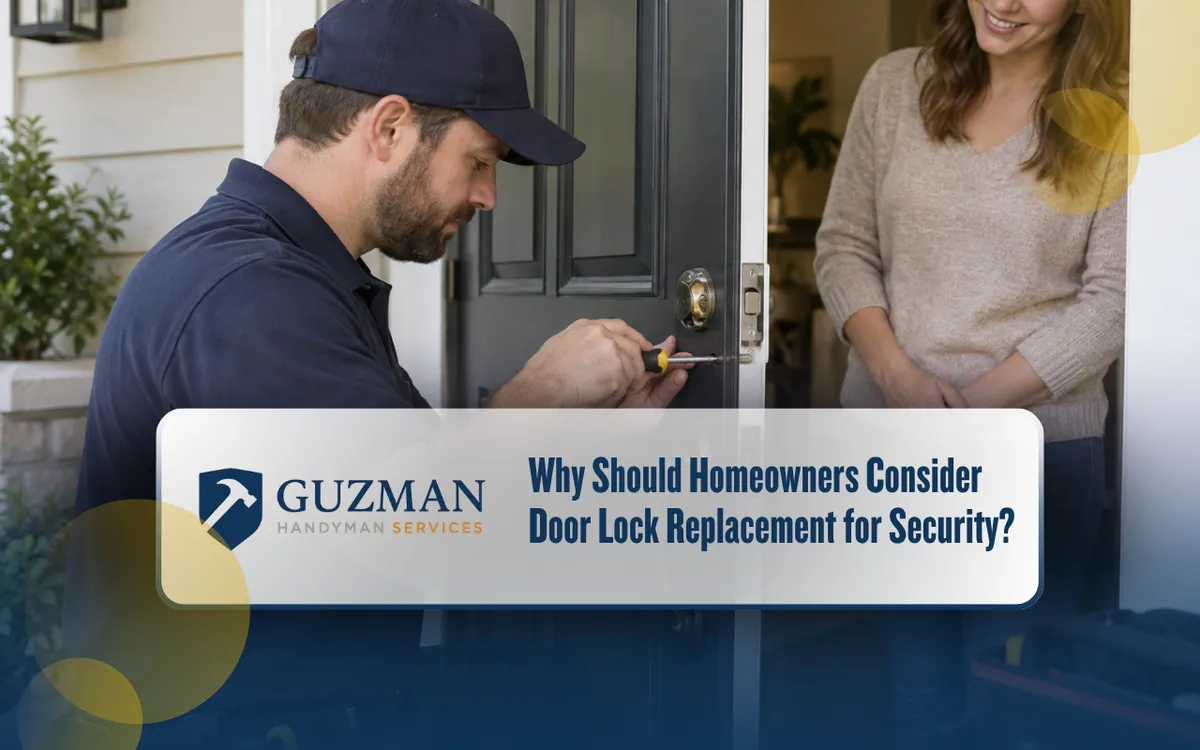
Why Should Homeowners Consider Door Lock Replacement for Security?
Why Should Homeowners Consider Door Lock Replacement for Security?
Recognize Early Lock Warning Signs Before Trouble Grows
Select Lock Types That Fit Each Home Entrance
Match New Hardware Carefully With Your Existing Door
Follow Simple Steps for a Cleaner Lock Change
Strengthen Entry Points With Simple Security Improvements Today
Maintain Lock Performance Through Easy Routine Home Checks
Confirm Smooth Operation Before Relying on New Hardware
When should I replace a door lock?
Which lock works best for an outside door?
Can I change a lock without replacing the door?
Door lock replacement can improve home security when a lock is worn, damaged, hard to use, or linked to missing keys. It also gives new homeowners better control over who can enter. At Guzman Handyman Services, we suggest checking every outside entry before small lock issues become larger safety concerns.
Recognize Early Lock Warning Signs Before Trouble Grows
First, pay attention to how each lock feels during normal use. A key should turn smoothly without heavy force. Likewise, the latch or deadbolt should move into the strike plate without rubbing.
However, several door lock problems can show that the hardware is wearing out. Rust, loose parts, deep scratches, or a key that sticks deserve attention. Also, a lock that suddenly becomes harder to turn may have worn parts inside.
Check for rust around the keyway and lock body.
Notice whether the key jams, bends, or needs extra force.
Look for loose screws, dents, or signs of forced entry.
Test whether the bolt enters the strike plate smoothly.
Review who may still have old copies of your keys.
Therefore, replacing door locks may be wise after moving into a home, losing keys, or ending access for previous key holders. At Guzman Handyman Services, we can also discuss door-related concerns when homeowners need practical help.
Select Lock Types That Fit Each Home Entrance
Next, choose hardware based on the door, location, and daily needs. Knob locks are common, yet they should not be the only protection on an outside entry. Deadbolts usually add stronger resistance because a solid bolt extends into the frame.
Meanwhile, smart locks can add keypads, codes, or app controls. However, they use power and may need extra setup.
For exterior door locks, weather also matters. Humidity, rain, and heat can affect metal parts over time. Therefore, corrosion-resistant finishes can support smoother use and longer service life.
Use the lock type that matches the door's purpose.
Compare security grades before choosing new hardware.
Check whether the lock fits wood, metal, or fiberglass doors.
Consider simple mechanical hardware when easy upkeep matters most.
For broader door planning, review our guide to stronger home entry choices. It explains useful points to consider when updating an exterior entrance.
Match New Hardware Carefully With Your Existing Door
Before buying a new lock, measure the current openings and check the latch position. Otherwise, the new parts may not line up correctly. Also, inspect the door edge and frame for wear, cracks, or movement.
Single-cylinder deadbolts are common on many home entrances. In contrast, double-cylinder models need a key on both sides. Therefore, local safety rules should guide the final choice.
Additionally, lock grades help compare strength and durability. Still, the lock must fit the door correctly to work as intended.
At Guzman Handyman Services, we look at the complete door area when discussing practical installation needs. Therefore, homeowners can consider the lock, frame, strike plate, and door condition together.
Follow Simple Steps for a Cleaner Lock Change
Replacing door locks can be manageable when the new hardware matches the existing openings. However, work slowly so the latch, lock body, and strike plate stay aligned.
Open the door and remove the screws from the old lock.
Support both lock halves while separating them from the door.
Remove the latch from the door edge and clean the opening.
Insert the new latch with the tapered side facing correctly.
Fit both lock halves through the opening and connect them.
Tighten screws evenly so the hardware stays straight.
Attach the strike plate and test the bolt several times.
If the new hardware does not align, do not force it. Instead, check the latch position, mounting screws, and strike plate. Our practical installation tips for better results can also help you understand door alignment and setup.
Strengthen Entry Points With Simple Security Improvements Today
A good lock works best when the surrounding door area is also solid. Therefore, check the frame, hinges, and strike plate during a door lock replacement. A weak frame can reduce the benefit of stronger hardware.
For example, longer screws can connect a strike plate more firmly to framing. A reinforced plate can also support the bolt area.
Inspect the frame for cracks, loose wood, or movement.
Use a solid strike plate that fits the new bolt.
Consider longer screws where the door construction allows them.
Add outdoor lighting near dark or hidden entry areas.
Use a peephole or viewer before opening the door.
When a door itself needs attention, our local help for complete entry projects explains available door installation support.
Maintain Lock Performance Through Easy Routine Home Checks
Regular care can help a lock move smoothly and reveal issues early. Therefore, inspect each main entry about twice a year. Tighten loose screws and check the bolt alignment.
Also, keep the lock area clean. Dirt and moisture can collect around outside hardware. Use lubricant only as the lock maker directs.
However, avoid heavy oil unless the product instructions allow it. Likewise, never force a bent key inside the cylinder.
At Guzman Handyman Services, we value simple maintenance because it can protect daily function. Still, recurring stiffness, damaged hardware, or poor alignment may mean a repair or replacement deserves closer attention.
Confirm Smooth Operation Before Relying on New Hardware
After installation, test the lock while the door is open. Turn the key several times. The action should feel smooth and easy.
Next, close the door gently and test again. If the bolt rubs or needs force, check the strike plate alignment.
Finally, test every outside entrance, especially after replacing door locks in several areas. At Guzman Handyman Services, we believe careful testing is an important final step because secure hardware should also work reliably every day.
If you want help with a door or entry project, talk with our local home project team. We can discuss the condition of the door and the practical next step.
Frequently Asked Questions
When should I replace a door lock?
Replace it when keys stick, hardware is damaged, or old keys may still be in circulation. If the door also has alignment issues, review our helpful tips for door setup before planning the work.
Which lock works best for an outside door?
A quality deadbolt is a common choice for outside entries because it adds stronger resistance than a basic knob lock alone. For more entry planning ideas, see our home entry improvement guide.
Can I change a lock without replacing the door?
Yes, when the door and existing openings are in good condition, new hardware may fit without changing the full door. For related service details, explore our door project service information.
Why does my new deadbolt feel hard to turn?
Misalignment between the bolt and strike plate is a common cause. Loose mounting screws can also affect movement. Therefore, check alignment first or ask our team about your project for practical guidance.
Should I replace locks after moving into a home?
Yes, changing locks can restore control when you do not know who has older keys. If you are also reviewing other home updates, explore our home repair and installation services for available door and improvement options.
References: