

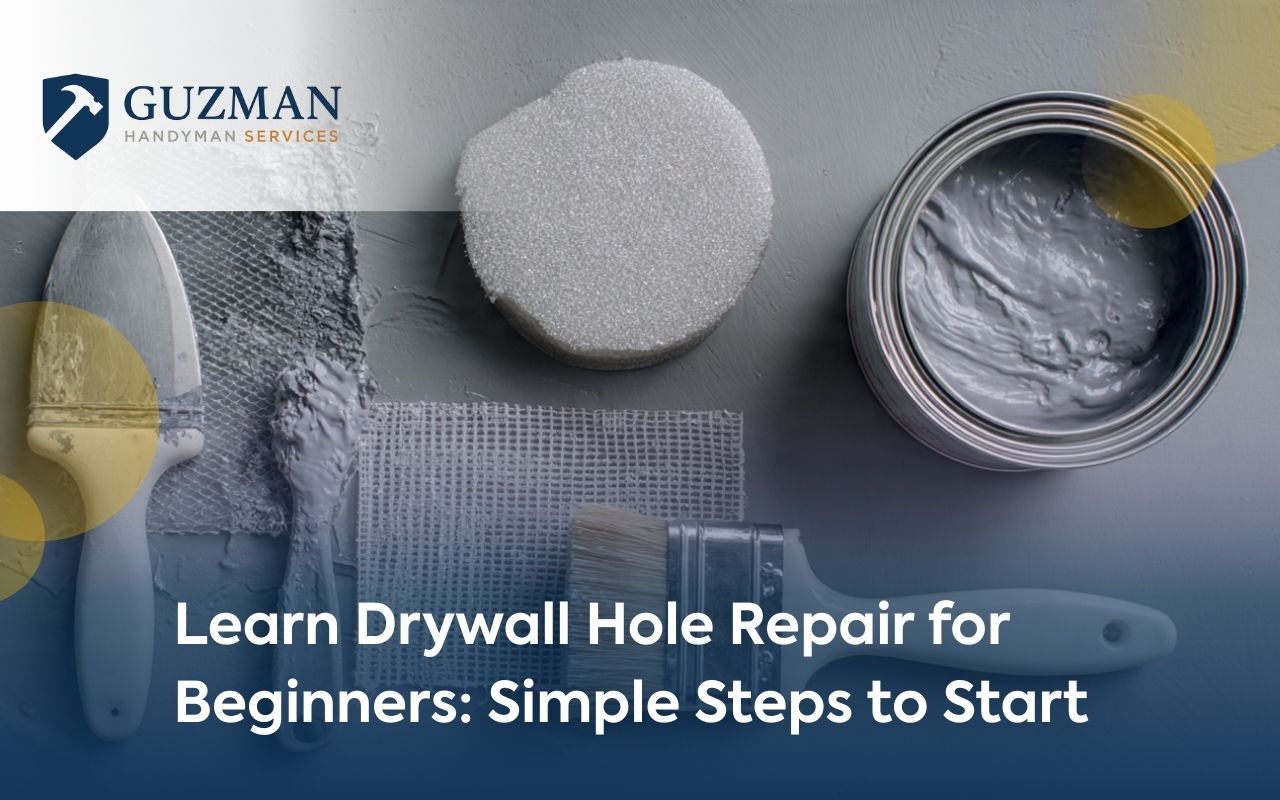
Learn Drywall Hole Repair for Beginners: Simple Steps to Start
Fixing a hole in your drywall might seem hard at first. However, with patience and clear steps, you can do it well. Drywall hole repair for beginners starts with basic tools and calm practice. Soon, you will feel more confident and steady.
Even better, you can handle small damage without stress. Although some jobs need help, many do not. By the end, you can create a smooth wall that looks clean and even.
Understanding Different Types of Drywall Damage
Before you begin, it helps to know what kind of damage you have. For example, pinholes and nail pops are common as walls settle. These often need quick fixes, which is great for drywall hole repair for beginners.
On the other hand, larger holes can come from doors or furniture. Also, moisture can cause soft spots, stains, or mold. In that case, you may need to cut out and replace drywall.
Pinholes and nail pops: small and simple repairs
Doorknob dents: medium holes that need a patch
Moisture damage: may need drywall replacement
Hairline cracks: can spread if ignored
Essential Tools and Materials for Drywall Hole Repair
First, gather everything so you can work without breaks. You will need a putty knife, a utility knife, joint compound, a sanding block, and a patch or mesh tape. Also, a clean setup helps you stay focused.
For many beginners, lightweight compound is easier to spread and sand. If the hole is bigger, a patch kit can save time. When you want to see more home repair options, explore handyman services for repairs and home projects.
Putty knife (5–6 inches) for smooth spreading
Mesh tape or a self-stick patch for support
Fine sandpaper (120–220 grit) for a flat finish
Primer and paint to blend the repair
Preparation: Clearing the Workspace and Safety Measures
To start, clear space around the wall and cover items with a drop cloth. Then, open a window or use a fan. Sanding makes fine dust, so wear a mask and safety glasses.
Next, lay out your tools within reach. This way, you avoid stepping over clutter. If you are working in different areas, check other service areas near you to learn where support is available.
Move furniture and protect floors
Wear eye protection and a dust mask
Keep air moving to reduce dust
Place tools nearby to work faster
Patching Small Drywall Holes: Step-by-Step Guide
Start by trimming loose drywall around the hole. Then, cut rough edges to make a clean shape. After that, place mesh tape or a self-stick patch over the opening.
Next, apply joint compound in thin layers and smooth the edges outward. Let it dry fully, then sand gently. Repeat with a second thin coat if needed. This is the core of drywall hole repair for beginners, and it builds quick confidence.
To keep your finish clean, remember this key step on how to patch a small drywall hole: blend the compound beyond the patch edges.
Filling and Sanding Techniques for Seamless Results
First, spread a thin coat of compound to avoid bumps. Use long strokes and keep the knife at a slight angle. Then, let it dry before sanding.
After that, sand lightly between coats. Wipe dust away before adding more compound. Finally, use extra-fine sandpaper for a smooth feel. Drywall hole repair for beginners looks best with several thin layers.
Dealing with Cracks in Drywall: Identification and Solutions
Small cracks often form near seams and corners. So, fix them early before they grow. Gently widen the crack into a small groove, then clean away dust.
Next, add mesh tape and press compound into the area. Let it dry, then sand smooth. These drywall crack repair tips help reduce repeat cracking. If cracks keep returning, check for movement or moisture problems.
Texturing Drywall for a Professional Finish
After patching, match the wall texture so the repair blends in. Common styles include knockdown and orange peel. First, practice on cardboard. Then, apply texture in light passes so it stays even.
Although texture can hide small flaws, it must match nearby areas. Drywall hole repair for beginners becomes much easier when you copy the wall pattern closely.
Priming and Painting Tips for a Polished Look
Prime the patched area before painting. This seals the new compound and helps paint look even. Next, use the same paint finish as the wall, like flat or eggshell.
Then, cut in with a brush and roll lightly for coverage. Let it dry and add a second coat if needed. With good prep, drywall hole repair for beginners can look nearly invisible.
Frequently Asked Questions
How long should joint compound dry before sanding?
Usually, it needs several hours. However, drying time depends on thickness, air flow, and humidity.
Can I repair a hole without a patch kit?
Yes, for tiny holes you can use compound alone. Still, patches help support larger openings.
What is the easiest way to blend the repair into the wall?
Use thin coats, sand between coats, and feather the edges. Then, match texture and paint finish.
When should I call a pro instead of fixing it myself?
If you see mold, soft drywall, or wide damage, get help. Also, repeated cracks may need a closer look.
Do I need primer if I’m using the same paint?
Yes, primer helps paint absorb evenly. Without it, the patch can look dull or blotchy.
Common Mistakes to Avoid in Drywall Repair
One common mistake is rushing dry time. If you recoat too soon, the surface can bubble or crack. Another mistake is skipping sanding, which leaves ridges under paint.
Also, mismatched texture or paint sheen can make repairs stand out. If you need local support, a drywall repair handyman in The Woodlands, TX may be the right choice for bigger jobs.
Finish Your Wall With Confidence
With practice, drywall hole repair for beginners becomes simple and even satisfying. Learn the damage type, prepare the space, and apply thin coats. Then, sand, prime, and paint for a clean finish.
If you prefer help for complex repairs, Guzman Handyman Services can support your home projects. Also, Guzman Handyman Services can handle larger drywall issues with care. When you want expert support nearby, Guzman Handyman Services is a helpful local option. For ongoing home maintenance, Guzman Handyman Services can guide you through repairs. To discuss your next project, contact Guzman Handyman Services through the contact page.