

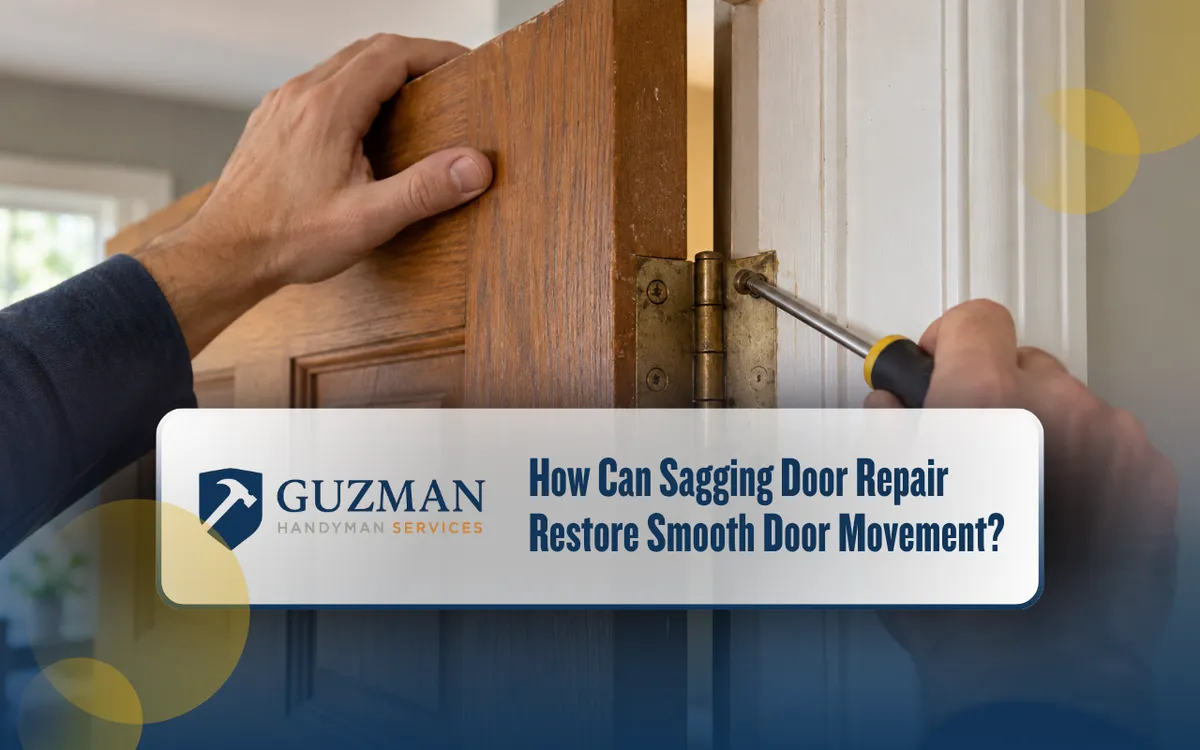
How Can Sagging Door Repair Restore Smooth Door Movement?
How Can Sagging Door Repair Restore Smooth Door Movement?
Identify Early Door Problems Before Damage Gets Worse
Gather Simple Tools That Make Door Repairs Easier
Check Door Alignment Carefully Before Making Any Changes
Tighten Loose Hinges to Create a Level Swing
Follow These Steps to Correct a Sagging Door
Adjust Misaligned Frames Without Removing Too Much Wood
Lubricate Hinge Pins to Keep Movement Smooth Longer
Replace Worn Hinges When Simple Fixes Stop Working
Prevent Future Sagging Through Simple Regular Door Maintenance
What usually causes a door to sag?
Can tightening hinges fix an uneven door?
When should damaged door hinges be replaced?
Sagging door repair can restore movement by correcting loose hardware, uneven gaps, and poor door alignment. First, check the hinges and screws. Then, inspect where the door touches the frame. Small adjustments can often lift an uneven door and help the latch meet the strike plate correctly.
Identify Early Door Problems Before Damage Gets Worse
First, look closely at how the door sits inside its frame. A sagging door often shows uneven spaces around its edges. Also, the latch may sit lower than the strike plate.
Several common conditions can slowly change how a door hangs. Therefore, finding the cause first can prevent unnecessary work.
Loose screws can allow a hinge to pull away from the jamb.
Worn sagging door hinges can let one side drop lower.
Humidity can make wooden doors expand and rub.
A heavy door can place extra pressure on the upper hinge.
Small frame changes can affect door alignment over time.
Next, open and close the door slowly. Scraping near the upper latch corner can suggest sagging. Meanwhile, rubbing elsewhere may indicate another alignment problem.
At Guzman Handyman Services, we check the whole door before choosing a repair. Therefore, we avoid changing parts that still work correctly.
Gather Simple Tools That Make Door Repairs Easier
Next, collect your tools before starting any sagging door repair. Fortunately, many homeowners already have the basic items needed.
A Phillips screwdriver for tightening common hinge screws
A drill for carefully installing suitable replacement screws
A level for checking the door position
A tape measure for comparing gaps around the frame
Thin wooden or cardboard shims for small adjustments
A hammer and chisel for careful fitting work
Silicone lubricant for stiff or noisy hinge pins
Also, replacement hinges may help when existing hardware looks bent or badly worn. However, check the screws before replacing parts.
For more preparation ideas, review our tips for better door installation. The guide covers practical steps that can support better door performance.
Check Door Alignment Carefully Before Making Any Changes
Then, close the door slowly and study the gaps around it. Ideally, the spacing should look fairly even from top to bottom.
Next, check whether the latch lines up with the strike plate. An uneven door may need lifting before the latch works.
Also, place a level against the door edge. If the door leans, note the direction before adjusting anything.
Therefore, you will have a clear starting point. At Guzman Handyman Services, we encourage careful checks before trimming any wood.
Instead, begin with changes that can easily be adjusted again. This approach reduces the risk of creating a larger gap.
Tighten Loose Hinges to Create a Level Swing
First, tighten every visible hinge screw with steady pressure. However, avoid forcing a screw once it feels secure.
Next, test the door again. Loose, sagging door hinges can create enough movement to make a door scrape.
Therefore, tightening them may solve a minor problem immediately. If a screw keeps turning, its hole may be worn.
A suitable repair can restore grip before the hinge is secured again. Also, longer screws can sometimes improve support.
However, screw size and placement matter. Incorrect hardware can affect how the hinge closes or damage surrounding material.
If your door also sticks, read our ways to fix a sticking door guide for related causes and solutions.
Follow These Steps to Correct a Sagging Door
Once you understand the problem, use a simple order for sagging door repair. Therefore, test each change before continuing.
First, close the door and locate every rubbing area.
Next, compare the gaps around the top and sides.
Then, tighten the screws on every hinge.
Afterward, open and close the door several times.
Next, inspect screws that no longer hold firmly.
Then, use a thin shim when a hinge needs adjustment.
Finally, confirm that the latch enters the strike plate smoothly.
However, remove wood only when simpler corrections do not solve the rubbing. Always remove a very small amount.
Then, test the door again before continuing. With Guzman Handyman Services, homeowners can also discuss more difficult door problems.
If basic adjustments are not enough, contact our handyman team to explain what is happening with your door.
Adjust Misaligned Frames Without Removing Too Much Wood
Sometimes, tightening the hinges does not completely correct an uneven door. In that case, a small hinge shim may help.
First, identify which hinge needs adjustment. Then, loosen or remove that hinge carefully.
Next, place a thin shim behind the hinge leaf. Afterward, reinstall the hinge and test the door.
Because small changes matter, avoid adding several thick shims at once. Also, inspect the rubbing point before using a plane.
Remove only a little material when trimming is truly needed. Otherwise, an oversized gap may remain afterward.
Lubricate Hinge Pins to Keep Movement Smooth Longer
After alignment improves, check whether the hinges still feel stiff. A suitable lubricant can reduce resistance and noise.
First, clean visible dirt around each hinge. Then, apply a small amount of silicone-based lubricant.
Afterward, move the door several times to spread the lubricant. However, lubrication cannot correct loose screws or damaged hinges.
Instead, it supports smoother movement after the main repair. At Guzman Handyman Services, we consider lubrication routine maintenance.
Therefore, correct the main cause first. Then, use lubrication to support smooth movement and reduce unnecessary hinge friction.
Replace Worn Hinges When Simple Fixes Stop Working
Eventually, some hinges become too bent or worn for simple adjustments. Therefore, replacement may provide a more stable result.
First, compare the old hinge dimensions with the replacement. Also, check the screw positions and hinge thickness.
Matching these details can reduce extra cutting. Then, install the replacement so it sits flat inside the existing recess.
Finally, tighten the screws and test the door swing. The door should move smoothly without pulling away from the frame.
For larger door projects, explore our door installation in The Woodlands TX information for additional service details.
Prevent Future Sagging Through Simple Regular Door Maintenance
Finally, regular checks can reduce future sagging door repair needs. Small maintenance steps can also protect hinges and surrounding wood.
Check hinge screws regularly and tighten loose ones early.
Keep hinges clean and lubricate them when movement becomes stiff.
Avoid repeatedly slamming heavy doors.
Watch for new rubbing marks around the frame.
Address changing gaps before the door becomes difficult to close.
Also, notice whether seasonal humidity changes how a wooden door fits. Some rubbing can result from temporary expansion.
Therefore, confirm the cause before removing wood. Our team at Guzman Handyman Services can assess concerns when basic corrections fail.
We focus on practical repairs, clear communication, and careful work around the home. Early attention can also prevent additional wear.
Frequently Asked Questions
What usually causes a door to sag?
Loose hinges, worn screws, door weight, and small frame changes can cause sagging. Therefore, start by checking the hardware. You can also review our tips for better door installation for related guidance.
Can tightening hinges fix an uneven door?
Yes, loose screws can allow one side of a door to drop. Therefore, careful tightening may restore better alignment. If sticking remains, see ways to fix a sticking door.
When should damaged door hinges be replaced?
Replace hinges when they are bent, badly worn, or unable to hold the door securely. For broader options, visit door installation in The Woodlands TX.
Should I trim a door that keeps rubbing?
First, check hinges and alignment before trimming anything. Otherwise, you may remove wood unnecessarily. For professional guidance, contact us and describe the problem.
Can a handyman repair a sagging door?
Yes, many door problems fall within common home repair work. At Guzman Handyman Services, we can discuss suitable next steps. Visit our home repair services in Porter TX page to learn more.
References:
Common Home Repairs You Can Do on Your Own — Popular Mechanics
Fix That Incredibly Annoying Sticking Door Once and for All — Architectural Digest